
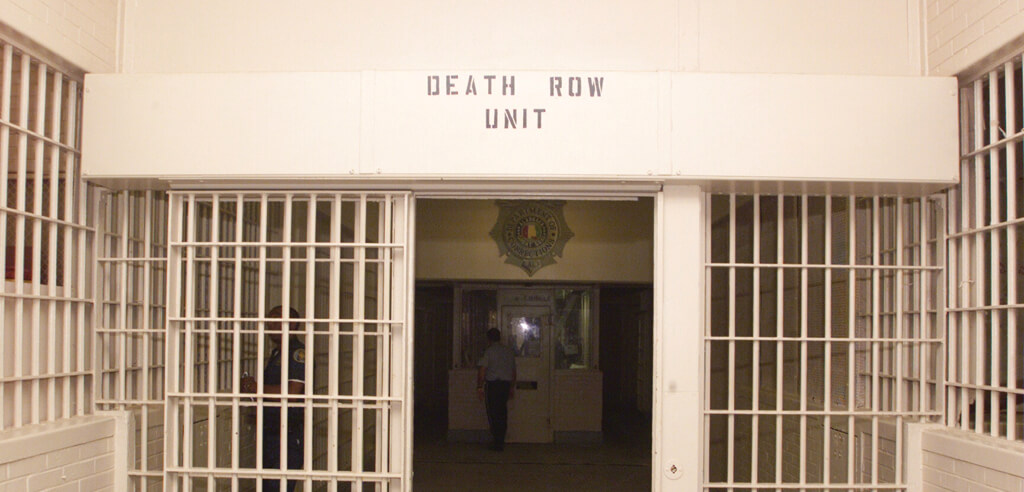
Alabama currently has 166 people on Death Row. 146 wouldn’t be on Death Row in any other state for two reasons:
1.) Alabama is the only state that allows a person to be sentenced to death by a non-unanimous jury.
2.) Alabama is the only state with people on Death Row because a judge overrode a jury verdict of Life without parole.
In 2020, The U.S. Supreme Court ruled that a person cannot be found guilty of a capital crime warranting death, unless the conviction is based on a unanimous jury verdict. The ruling however did not extend to the sentencing phase. In their 2020 ruling, the Court discussed the racist underpinnings of non-unanimous verdicts, a practice that came about when Black citizens first became eligible for jury service. The requirement of a unanimous jury for a “death” sentence means that a single juror can spare the life of a defendant in any state, but not in Alabama.
Critically, 115 people set to be executed in Alabama were by non-unanimous jury verdicts. (Study by Georgetown University Law Interns, Courtney Neufeld & Anna Cummings, Professor Clifford Sloan, Class of 2022)
In 2017, Alabama finally became the last state to ban judicial overrides, a practice where Alabama judges commonly overruled a jury verdict of “life without parole” to “death”. Alabama’s current Governor, Kay Ivey, a Republican, made this change possible. Yet, the ban on judicial overrides was not retroactive.
Alabama now has 31 inmates scheduled to die because of this outlawed, unconstitutional practice.
The Equal Justice Initiative found that “the proportion of death sentences imposed by override had often been elevated in election years.” For instance, while judicial overrides accounted for 7% of death sentences in 1997, a nonelection year, judicial overrides rose to 30% the following year in which Alabama judges ran for election.
To date, the U.S. Supreme Court has refused to review Alabama’s death sentences by judicial overrides. This life or death is in the hands of the governor, the Alabama legislature, and members of Alabama’s Supreme Court.
Nationwide, one person on death row has been exonerated for every 9 executions conducted since 1976. That means we get it wrong about 11% of the time. Prosecutorial and police misconduct account for approximately 80% of these wrongful convictions. Shamefully, misconduct was most frequent in cases involving black defendants (87%), according to the Death Penalty Information Center, February 2021.
Judge Alex Kozinski, former Chief Judge of the Ninth Judicial Circuit Court of Appeals, said the withholding of exculpatory evidence by prosecutors is “epidemic” in America. (Huffington Post, by Radley Balko,1/23/2014)
Since the Supreme Court granted prosecutors total immunity from civil liability in the Imbler Case in 1976, prosecutors have gotten approximately 99% of the indictments they seek.
The reason?
Grand juries are a secret proceeding. There’s no lawyer for the target or victim present, and no judge to oversee what prosecutors are doing. Prosecutors have free reign to present false testimony, false evidence, or withhold exculpatory evidence to get the outcome they want.
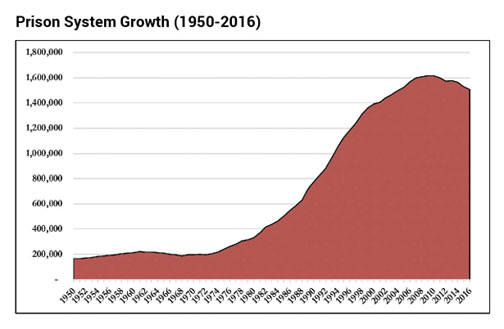
It has been a piece of cake for prosecutors emboldened by Presidents who declared a “War on Drugs” and a “War on Crime.” In the 1970’s and 1980’s the U.S. Congress, state legislatures, governors and prosecutors approached this task with passionate and political zeal. A study by the Brenen Center (July 20, 2018) shows how incarceration numbers hovered a bit over 200,000 and then skyrocketed to 1,6000,000 after the U.S. Supreme Court’s Imbler decision in 1976.
To show how cavalierly prosecutors and courts have accepted prosecutorial misconduct, President Obama’s lawyer, Elena Kagan, had her Deputy argue to the U.S. Supreme Court on January 4th, 2010:
“U.S. Citizens do not have a constitutional right not to be framed.” This in the case of Terry Harrington and Curtis McGhee v. Pottawattamie County, Iowa, two Black teenagers who were framed by investigators and spent twenty-five years in prison for a crime they clearly didn’t commit. (LA Times, by David savage, 1/5/2010)
Ending unjust convictions, will involve rethinking prosecutorial immunity. The U.S. Supreme Court will not take this on, so it’s up to Congress and state leaders.
Alabama has not been spared from the tragic miscarriage of judicial injustice pervasive throughout the last few decades of U.S. history.
As a former Governor, I find Alabama’s death penalty law to be so legally and morally disturbing, we call upon Alabama Legislators to outlaw death sentences by non-unanimous jury verdicts, to make the law retroactive for those 115 currently on Death Row having been sentenced by non-unanimous juries, and to make the 2017 ban on judicial overrides retroactive for the 31 people now on Death Row by this unjust practice.